
The Best Behavior Modification Training Happens Before We Even See The Problem


One of the biggest misconceptions in dog training is that in order to fix a behavior problem, your dog needs to repeatedly “work through” the bad behavior itself.
Reactive dog? Bring them to the busiest pet store. Dog jumps on guests? Invite ten people over and hope for the best. Dog chases squirrels? Let them fail over and over until they magically “learn.” Even with the best of intentions, this is simply asking too much too fast and setting your dog up to fail.
Real behavior modification, ethical, sustainable behavior modification, usually happens long before the dog is asked to handle the hardest version of the problem.
At Tri-Dog Solutions, we believe good training is about setting dogs up to succeed, not throwing them into situations that overwhelm them and hoping they figure it out.
Because behavior change is built through repetition- and the outcome of those repetitions matter.
Your Dog Learns From Every Experience Whether Good and Bad
Dogs don’t magically separate “training moments” from real life ones. Every interaction, every walk, every explosion at the end of the leash, every frantic greeting at the front door is information their brain is storing away to use again in the future.
That means if your dog practices:
barking and lunging at dogs
sprinting after squirrels
body-slamming guests for attention
losing their mind at the window
…those behaviors become stronger, more rehearsed, and more automatic over time.
Not because your dog is stubborn. Not because they’re trying to spite you.
But because brains get better at whatever they repeatedly practice.
The good news? That works both ways!
If we can create intentional repetitions where your dog feels safe, successful, and capable of making better choices, we can start changing the emotional and behavioral patterns underneath the problem.
That’s where real behavior modification lives.
Trainers Don’t Need to See the “Worst” Behavior to Help You
This surprises people sometimes, but we promise it's true!
Clients often apologize because their dog “isn’t acting bad enough” during a session.
We hear things like:
“He’s usually WAY worse than this.”
“I swear she normally loses her mind.”
“I wish you could see what he's really like”
But honestly? We usually don’t.
Because good trainers are not trying to trigger your dog into the biggest reaction possible just to prove the behavior exists.
We believe you. And more importantly, we care far more about what happens before the explosion than the explosion itself.
The goal is not to collect dramatic training footage. The goal is to change the dog’s experience and response pattern.
That means we work at levels where your dog can still think, process information, and succeed - so we can get more of the good reps we want and less of the behavior we're trying to get rid of.
Reactivity Training Should Feel Controlled, Not Chaotic!
A great example of this is working on leash reactivity.
Ethical reactivity work is rarely:
walking directly into crowded spaces
forcing greetings
overwhelming dogs with their triggers
closing distance too quickly
“correcting” explosions after the dog is already overwhelmed
Instead, good reactivity training often looks… kind of boring! And that’s a good thing.
We use controlled setups with neutral dogs where we can:
change distance as needed
control movement and energy levels
predict the other dog’s behavior
carefully adjust pressure on our dogs
retreat when needed
and most importantly, create successful repetitions!
Maybe your dog starts by simply noticing another dog 100 feet away and staying regulated (so you can reward them)
That matters.
Maybe we practice disengaging calmly while the other dog moves slightly closer.
That matters too!
Maybe we help your dog learn that distance is available, that they don’t have to scream to create space, and that their nervous system is safe enough to stay online and listen to what we're telling them.
That’s quality behavior modification, and that's what we're here for!
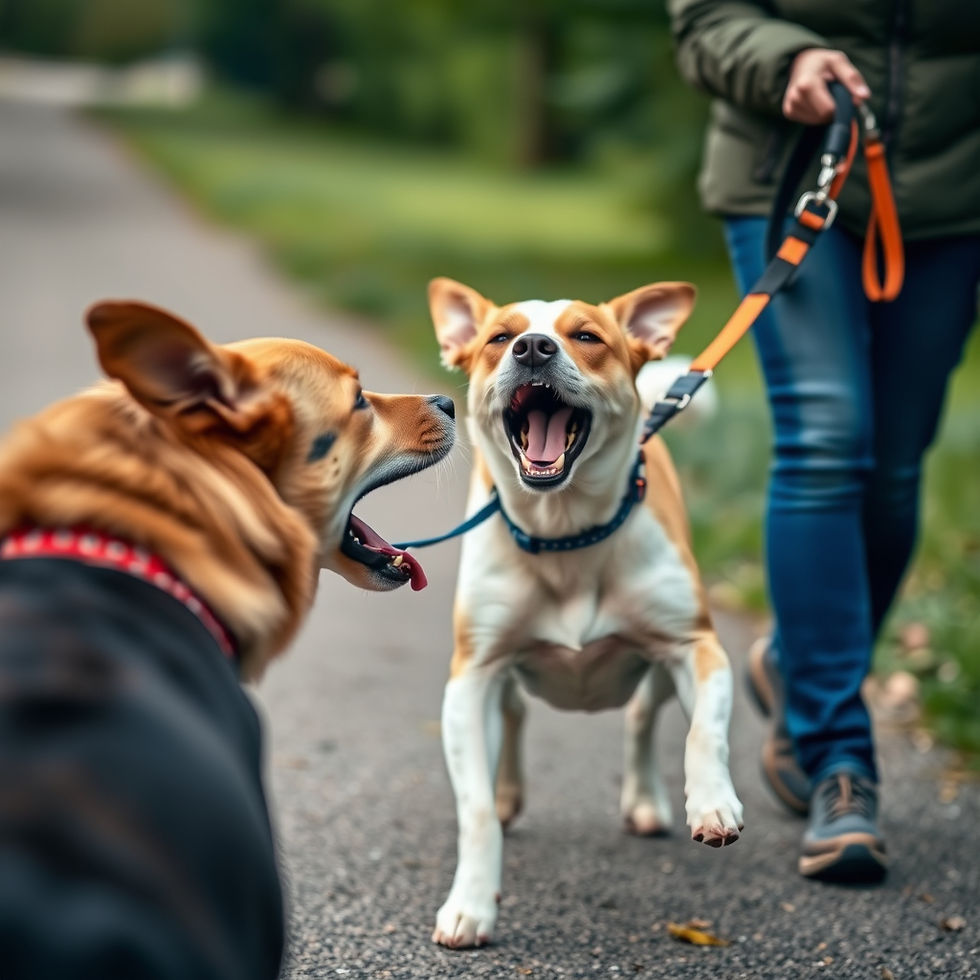
Throwing Dogs Into the Deep End Creates More Struggle
Humans love progress. We want fast results. We want proof the training is working.
But asking for too much too soon is one of the fastest ways to stall progress entirely.
Imagine being terrified of public speaking and someone saying: “Don’t worry, we’ll help you. First lesson starts tomorrow in front of 5,000 people.”
You wouldn’t suddenly become confident. You’d probably panic.
Dogs are no different.
When we overwhelm dogs:
thinking shuts down (their ears/hearing first)
nervous systems go into survival mode
long term learning decreases dramatically
emotional responses intensify
frustration builds for both dog and owner
Then owners understandably feel defeated because the dog “knows better at home.”
But home is where the dog had enough capacity to learn.
The environment matters. The difficulty matters. Changing their nervous system matters.
Real-World Behavior Modification Examples
The Reactive Dog
Instead of dragging your dog through crowded trails every day hoping they “get used to it,” we build skills first:
engagement with the human on the other end of the leash
decompression and being able to self regulate when overwhelmed/excited
pattern recognition: what to my owner wants me to do when I see a trigger
emotional regulation: being able to come down after a reaction
calm observation: rewarding observing without reacting
successful exposure at manageable distances: creating successful reps of new behaviors around triggers
Then we gradually increase difficulty as the dog gains the capacity and repetitions to be successful!
The Guest-Jumping Dog
Your dog probably shouldn’t rehearse launching at guests 47 times before we change our approach to stopping the behavior.
Instead, we should practice:
calm stationing behaviors: go to bed or place
controlled greetings: short intervals, food rewards on the floor, on leash
no petting until four paws on the floor
setups with predictable people before real guests arrive
We build the skill before Thanksgiving dinner chaos.
The Squirrel-Chasing Dog
Your dog may not be ready to ignore a squirrel sprinting six feet away on Day One.
That doesn’t mean training isn’t working.
We start with:
engagement around low-level distractions
leash communication
finding ways to feed that drive in a constructive/play based way
movement regulation
learning how to disengage from prey visually before physically reacting
Because impulse control is built progressively, not demanded instantly.
Slow Is Often Faster
One of the hardest truths in behavior work is this:
Going slower often creates faster, more lasting results.
When dogs successfully build skills progressively:
learning improves steadily
confidence grows naturally
nervous systems start to regulate
behaviors become more reliable
owners become clearer and more consistent
And perhaps most importantly? Dogs stop feeling like they’re constantly failing while owners start to trust their dogs decisions.
That matters to us.
Because training should not just create obedience. It should create clarity, safety, trust, and a better quality of life for both ends of the leash.
Your Dog Doesn’t Need More “Tests”
They need better practice. The dogs struggling with big feelings, impulsivity, reactivity, overexcitement, or frustration are not bad dogs.
And owners struggling through those challenges are not failing them.
Most people are simply trying to solve deeply emotional behaviors in environments that are far too difficult, far too quickly, without enough support.
Behavior modification is not about proving your dog can survive the hardest situation, It’s about thoughtfully building the skills, emotional regulation, and repetition necessary so that eventually… those hard situations stop feeling so hard.
Want help working on improving your dogs reactivity, impulsivity or behavior modification, check out our dog training lesson programs here or want a more immersive kick start program, our stay and train programs can get things shifted in a big way!
Have other questions, feel free to reach out, we'd love to chat - contact us here.
Comments